See the differences between profitability and return on investment.
Profitability indicates whether sales are sufficient to cover expenses and generate profit. To calculate profitability, net profit is compared with gross revenue.
To identify this value in the Nex report, use the following columns in the Profitability by Sold Product report:
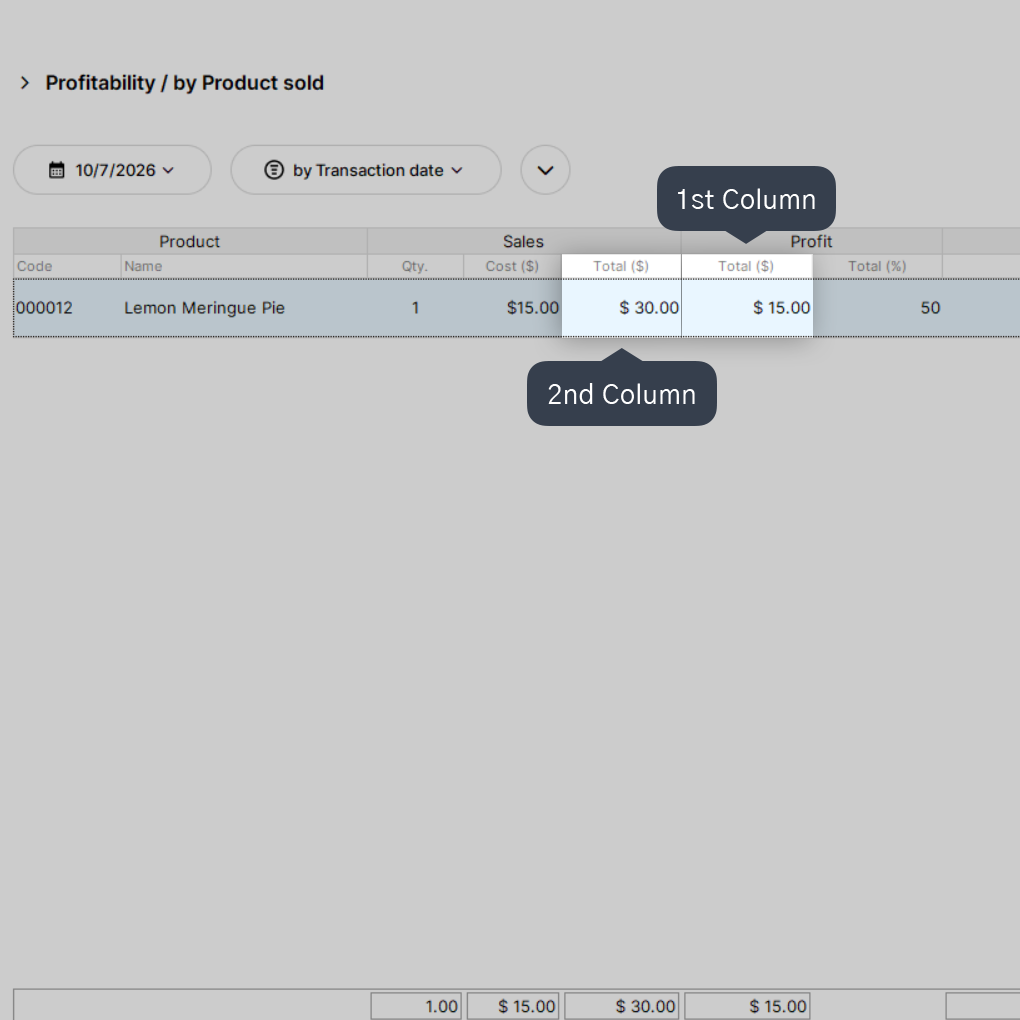
In the example above, the product has a unit cost price of $15.00 and a unit selling price of $30.00.
Profitability is calculated by the formula:
Profitability = (Net profit ÷ Gross revenue) x 100
Substituting the values:
Profitability = (15.00 ÷ 30.00) x 100 Profitability = 0.5 x 100 Profitability = 50%
In this example, the sale generated a profit of $15.00, which represents 50% of the selling price.
Return on investment shows the return that a specific investment is generating. To calculate return on investment, net profit is compared with the invested amount (cost price).
Although Nex does not have a specific report for return on investment, it is possible to calculate it based on the same profitability report:
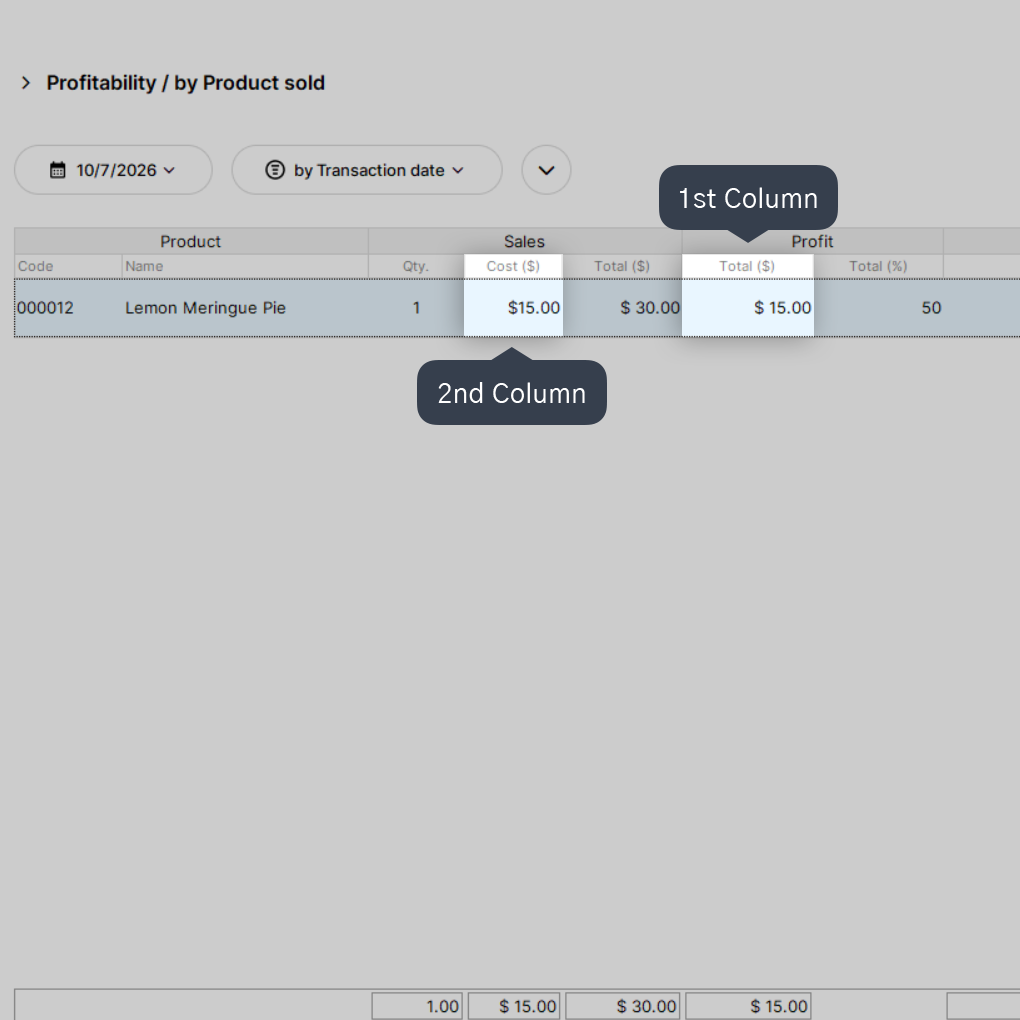
Return on investment is calculated by the formula:
Return on investment = (Net profit ÷ Investment) x 100
Substituting the values:
Return on investment = (15.00 ÷ 15.00) x 100 Return on investment = 1 x 100 Return on investment = 100%
In the example, the product's return on investment is 100%, which is equivalent to the same percentage as the markup.
The concepts of profitability and return on investment are different, but both are essential for the store's financial control, providing complementary results and information.
In the example:
This means that, for each product sold, you can buy 1 new products with the profit obtained. That is, the sale resulted in a profitability of 50% and a return on investment of 100%.


